Al Capone and the tax case that ended his reign
Federal investigators unable to secure a murder conviction against Chicago gang leader Al Capone built an income-tax case that sent him to prison and weakened his criminal organization.
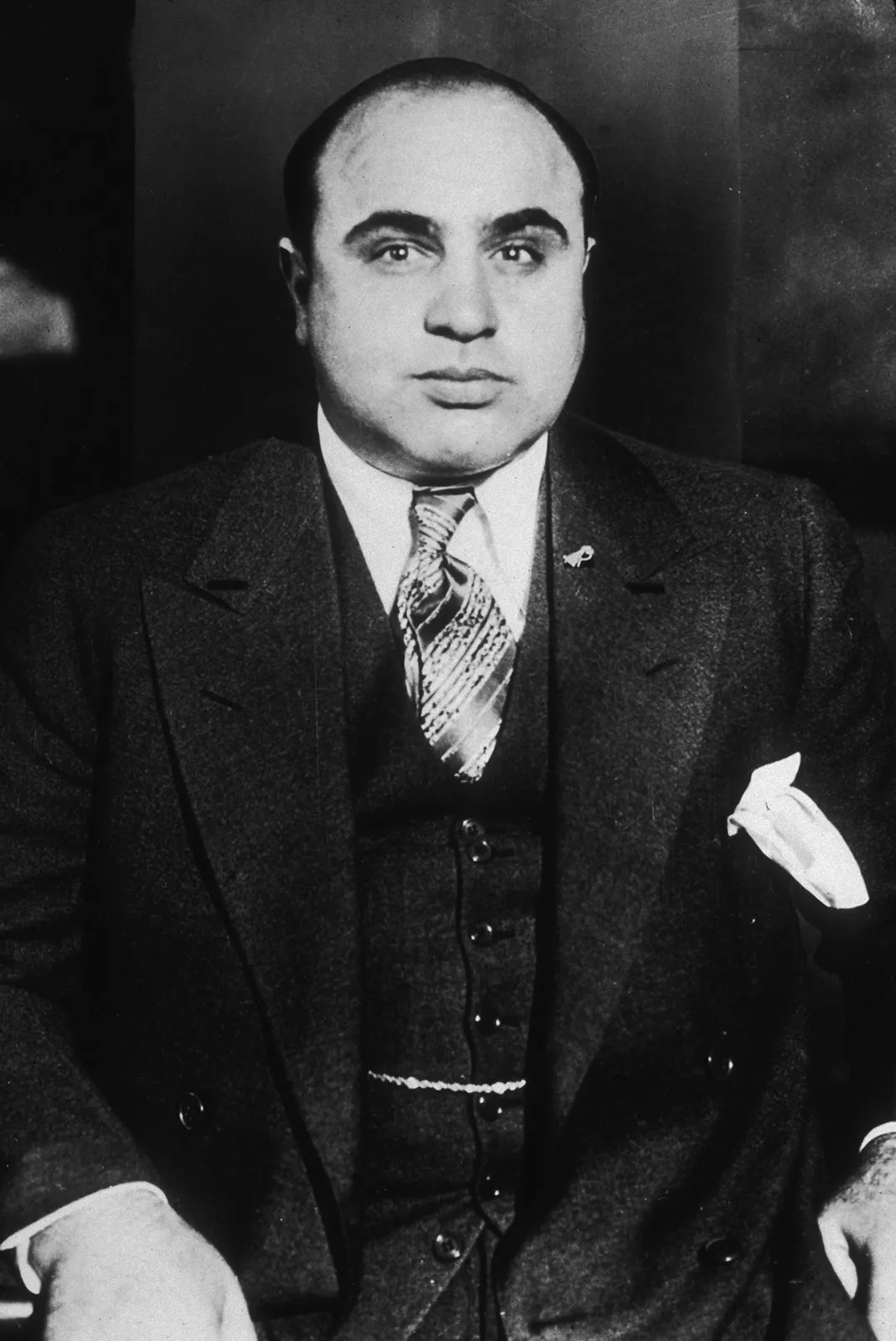
- Period
- 1931
- Location
- Chicago, Illinois
- Case status
- Convicted of federal income-tax evasion
Power built through Prohibition
Alphonse Capone rose through Chicago’s underworld during Prohibition, when the ban on commercial alcohol created enormous illegal markets. His organization made money through bootlegging, gambling and other rackets and was linked to intimidation and violence. Capone cultivated a public persona of wealth and generosity while witnesses to gang crimes were difficult to secure. The 1929 St. Valentine’s Day Massacre intensified pressure on federal authorities, although Capone was never convicted for that attack. Investigators increasingly looked beyond direct evidence of homicide to the money sustaining his power.
Following income instead of gunfire
The federal strategy relied on the principle that illegal income was still taxable. Treasury investigators reconstructed Capone’s earnings and spending from ledgers, witnesses and the financial habits of his organization. Because Capone did not file income-tax returns, prosecutors sought to prove both substantial taxable income and a willful effort to evade payment. The approach was painstaking: cash businesses and criminal enterprises rarely produced conventional books, and witnesses faced obvious danger. The case turned fragmented records into a financial narrative that could be tested in court.
A trial under intense scrutiny
Capone initially expected to resolve the charges through a guilty plea, but the court rejected an arrangement that would have limited punishment. At trial in 1931, prosecutors presented evidence of income and expenditures inconsistent with his filings. Judge James Wilkerson also switched jury panels after learning of possible tampering, a move intended to prevent the organization from controlling the verdict. The jury convicted Capone on several tax-evasion counts and failures to file returns while acquitting him on other allegations.
Sentence and imprisonment
Capone received an eleven-year federal sentence, a major penalty for tax crimes at the time, as well as fines and costs. He served time in Atlanta before being transferred to Alcatraz. His health deteriorated from neurosyphilis, and he was released in 1939 after serving more than seven years. The conviction did not erase organized crime in Chicago, but it removed the figure whose celebrity and authority had made him its symbol. It also demonstrated that prosecutors could use financial offenses when violence was difficult to prove beyond a reasonable doubt.
The financial-prosecution legacy
The Capone case is often simplified into the phrase that taxes succeeded where murder charges failed. The fuller lesson is institutional: investigators combined tax expertise, witness development, document analysis and courtroom safeguards against interference. Modern organized-crime, fraud and corruption investigations routinely use similar financial methods, including tracing proceeds, identifying beneficial ownership and comparing reported income with assets. The case also underscores the limits of reputation as evidence. Capone’s public notoriety could not substitute for proof; the government secured a conviction only by presenting a charge it could document.
Reading the historical record
The surviving record distinguishes Capone’s tax conviction from the many violent crimes attributed to his organization. The FBI history explains the wider federal pursuit, while the biographical source traces the conviction and imprisonment. Those sources do not establish that Capone personally committed every act associated with Chicago’s underworld. The legally proved outcome is narrower: a federal jury found willful tax offenses, and the sentence that followed removed him from the organization he had led.
Reader comments.
Keep it respectful and relevant to the report. No personal information, harassment or unsupported accusations. Comments are readers’ views.
Loading your sign-in status…