John Dillinger and the federal manhunt
Bank robber John Dillinger escaped jails, led a violent gang and became a national fugitive before federal agents shot him outside Chicago’s Biograph Theater in July 1934.
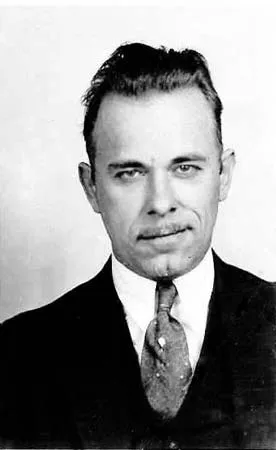
- Period
- 1933–1934
- Location
- Midwestern United States
- Case status
- Dillinger killed by FBI agents in Chicago
From prison to a bank-robbery gang
John Dillinger served more than eight years in Indiana prison after a failed robbery. Paroled in 1933, he quickly returned to crime and became associated with men who escaped from the same prison. The gang robbed banks and police arsenals, acquiring weapons, ammunition and body armor. Their crimes included killings of law-enforcement officers. Newspaper coverage transformed Dillinger into the best-known figure in a broader group, sometimes obscuring the separate acts and legal responsibility of individual members.
Escapes created the legend
Dillinger was arrested in Ohio but freed when associates attacked the jail and killed the sheriff. After capture in Arizona, he was returned to the jail at Crown Point, Indiana, to face a murder charge. In March 1934 he escaped, reportedly using a wooden or imitation pistol, and drove the sheriff’s car across the state line. That interstate trip created a clear federal automobile-theft offense and gave the FBI direct jurisdiction to pursue him.
Little Bohemia and its consequences
Agents tracked Dillinger and associates to Little Bohemia Lodge in Wisconsin in April 1934. The attempted raid failed. Dillinger escaped, a civilian was killed by agents who mistook a departing car for the fugitives, and “Baby Face” Nelson killed FBI agent W. Carter Baum nearby. The operation exposed deficiencies in intelligence, coordination and fire discipline. It also intensified pressure on the Bureau to capture the fugitives and shaped later improvements in training and firearms capability.
The Biograph Theater operation
Information from Anna Sage placed Dillinger with Polly Hamilton in Chicago and indicated they would attend a movie on July 22, 1934. Agents covered two possible theaters before concentrating on the Biograph. When Dillinger left, agents moved in. The FBI account states that he reached for a pistol and ran toward an alley; three agents fired, fatally wounding him. The crowded urban setting and reliance on an informant made the operation risky, and the shooting immediately became part of the Dillinger legend.
Public enemy and institutional symbol
Dillinger’s death helped the FBI present itself as a modern national force capable of defeating mobile armed gangs. Later retellings often romanticized him as a Depression-era rebel, but the documented record includes deadly robberies, jail violence and civilians placed at risk. The case also illustrates how jurisdiction shaped enforcement: federal agents entered decisively after an interstate stolen-car offense, not because every bank robbery was automatically federal. Dillinger’s historical importance lies as much in the state’s developing response—national records, coordinated pursuit and specialized agents—as in the fugitive himself.
Reading the historical record
FBI history is an institutional account and should be read alongside independent biography, particularly when assessing disputed episodes such as the Crown Point escape and the final shooting. The broad sequence is well documented: parole, robberies, arrests, interstate flight, Little Bohemia and the Biograph operation. Describing that record accurately does not require endorsing every contemporary “public enemy” headline. It requires separating Dillinger’s actions from those of associates and acknowledging the civilians and officers placed in danger.
Reader comments.
Keep it respectful and relevant to the report. No personal information, harassment or unsupported accusations. Comments are readers’ views.
Loading your sign-in status…