The 1962 escape from Alcatraz
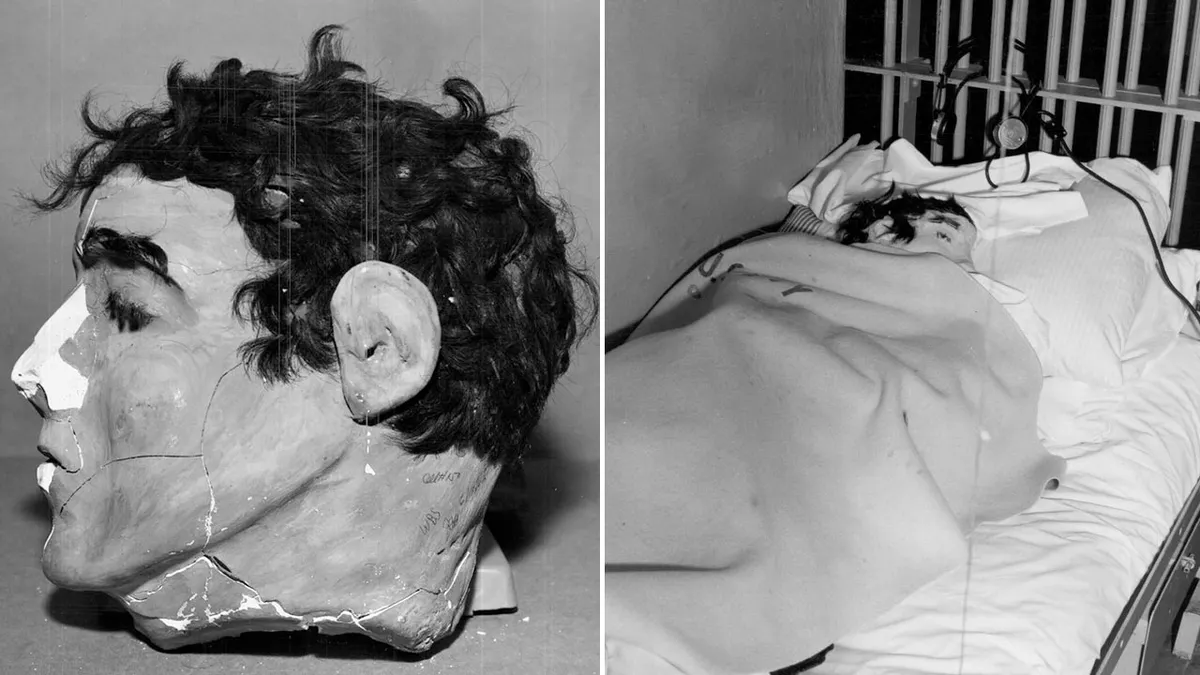
Frank Morris and brothers John and Clarence Anglin vanished from Alcatraz after leaving papier-mâché heads in their beds and crawling through openings they had widened behind their cells.
- Period
- 1962
- Location
- San Francisco, California
- Case status
- Escapees presumed drowned; case remains officially unresolved
A prison designed to contain escape risks
Alcatraz became a federal penitentiary in 1934 and housed prisoners considered difficult to manage elsewhere. Its island setting, cold water and strong currents formed part of the security system. Frank Morris and brothers John and Clarence Anglin had records that included earlier escape attempts. In adjoining cells, they began exploiting deterioration around ventilation openings. Allen West was also involved in the planning but did not leave his cell on the night the others escaped, later providing investigators with a detailed account.
Months of concealed preparation
The men widened openings behind their cells with improvised tools, concealed the work and climbed into an unguarded utility corridor. They constructed convincing dummy heads from plaster-like material, paint and human hair, placing them in their beds to delay discovery. On top of the cell block they assembled a raft and life vests from stolen or collected raincoats. The preparation required coordination and secrecy over many months. It also exploited parts of the prison that were less visible than the bars, gun galleries and shoreline patrols that defined Alcatraz in the public imagination.
The night of disappearance
On the night of June 11, 1962, Morris and the Anglin brothers moved through the openings, climbed utility space, reached the roof and descended toward the water. West could not remove his grille in time and was left behind. The three others were not seen again. The deception was discovered during the morning count on June 12. Searchers found evidence associated with the escape, including a paddle and parts of the raincoat equipment, but no bodies. The absence of definitive remains created the question that has sustained the case for decades.
The official investigation
The FBI conducted an extensive investigation, checking reported sightings, family contacts, criminal records and physical evidence. The Bureau concluded that the escapees probably entered San Francisco Bay and drowned, noting the cold water, currents and limited evidence that they reached land. In 1979, the FBI closed its active investigation and transferred fugitive responsibility to the U.S. Marshals Service. That conclusion was an assessment rather than a recovered-body identification, and the men’s fate has never been established by direct physical proof.
Evidence, claims and enduring uncertainty
Later claims have included alleged photographs, letters and family stories suggesting survival. None has produced a publicly verified chain of evidence that resolves the escape. The strongest historical account therefore separates what is documented—the cell alterations, dummy heads, route and missing men—from what remains inference. Alcatraz closed in 1963 and later became part of the National Park Service. The escape remains significant because it exposed practical vulnerabilities in a prison marketed as nearly inescapable and because the central outcome, death in the bay or successful flight, remains unanswered.
Reading the historical record
Official accounts agree on the escape route, the dummy heads, the raincoat equipment and the disappearance of Morris and the Anglin brothers. They differ from popular retellings in treating survival as unproved. No authenticated communication, body or verified later sighting has resolved the question. The responsible status is therefore neither “successful escape” nor confirmed drowning, but an unresolved disappearance following a documented prison breach, with the FBI’s probability assessment clearly identified as an assessment.
Reader comments.
Keep it respectful and relevant to the report. No personal information, harassment or unsupported accusations. Comments are readers’ views.
Loading your sign-in status…