The Atlanta Child Murders
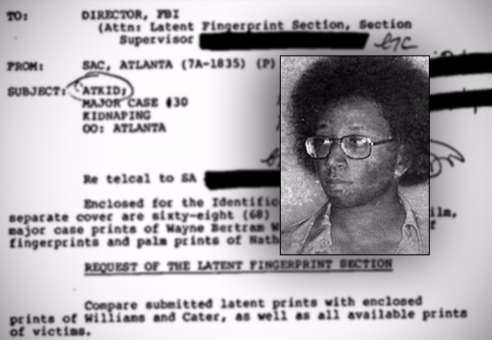
Twenty-nine children, teenagers and young adults were killed during a 22-month period. Wayne Williams was convicted in 1982 of murdering two adults. A task force later said evidence linked him to 20 additional deaths, but he was not tried for those killings. The distinction between his convictions and the wider official attribution remains essential.
- Period
- 1979–1981
- Location
- Atlanta, Georgia
- Case status
- Two convictions · wider attribution disputed
Children disappear across Atlanta
The crisis began in the summer of 1979, when fourteen-year-old Edward Hope Smith and thirteen-year-old Alfred Evans disappeared and were later found dead. Over the next twenty-two months, the names of missing and murdered Black children, teenagers and young adults accumulated.
The victims did not all disappear in the same circumstances or die in the same way. Families organised searches and demanded attention while fear spread through Atlanta’s Black communities. The eventual task-force list contained twenty-nine deaths, a grouping that has remained the subject of debate.
A local investigation becomes a major task force
Atlanta police and the Georgia Bureau of Investigation led the early work. The FBI first became involved after the 1980 abduction of a seven-year-old girl raised a possible federal kidnapping issue. The Bureau provided laboratory, behavioural and lead-following assistance before opening a major-case investigation in November 1980.
Investigators looked for shared characteristics among a subset of cases and deployed surveillance around bridges over the Chattahoochee River after bodies began appearing in or near waterways. The operation involved local officers, cadets and federal agents.
The bridge stop
Early on May 22, 1981, a surveillance team heard a splash beneath a bridge. A car crossed, turned around and returned. Officers stopped the driver, twenty-three-year-old photographer and music promoter Wayne Williams, but released him because they did not yet have grounds to arrest him.
Two days later, the body of Nathaniel Cater was found downstream. Investigators focused on Williams. Fibre and hair comparisons, witness accounts and his movements became central to the case. He was arrested on June 21, 1981.
Two murder convictions
Prosecutors tried Williams for the murders of Cater and Jimmy Ray Payne, both adults. At trial, the state also introduced evidence that it argued connected Williams to additional victims. On February 27, 1982, the jury convicted him of both murders, and he received two consecutive life sentences.
After the trial, the task force concluded that evidence linked Williams to twenty more of the twenty-nine deaths it had examined. Authorities closed many of those files. Williams was never charged with or tried for those additional killings and has maintained his innocence.
The unresolved divide
The legal finding is precise: Williams was convicted of killing Cater and Payne. The larger official attribution rests on investigative conclusions, not twenty additional verdicts. Several victims’ relatives have questioned whether one person was responsible for every death on the list.
That distinction is essential to any accurate account. The case is both a successful prosecution and an incomplete public reckoning, shaped by the vulnerability of the victims, uneven early attention and the difficulty of revisiting evidence decades later.
Reader comments.
Keep it respectful and relevant to the report. No personal information, harassment or unsupported accusations. Comments are readers’ views.
Loading your sign-in status…