Doors, Axes and a Jazz-Night Threat: The Axeman of New Orleans
A series of nighttime attacks on New Orleans households in 1918 and 1919 was attributed to an unidentified assailant known as the Axeman.
- Period
- 1918
- Location
- New Orleans, Louisiana
- Case status
- Unsolved; no person convicted of the series
Night attacks inside occupied homes
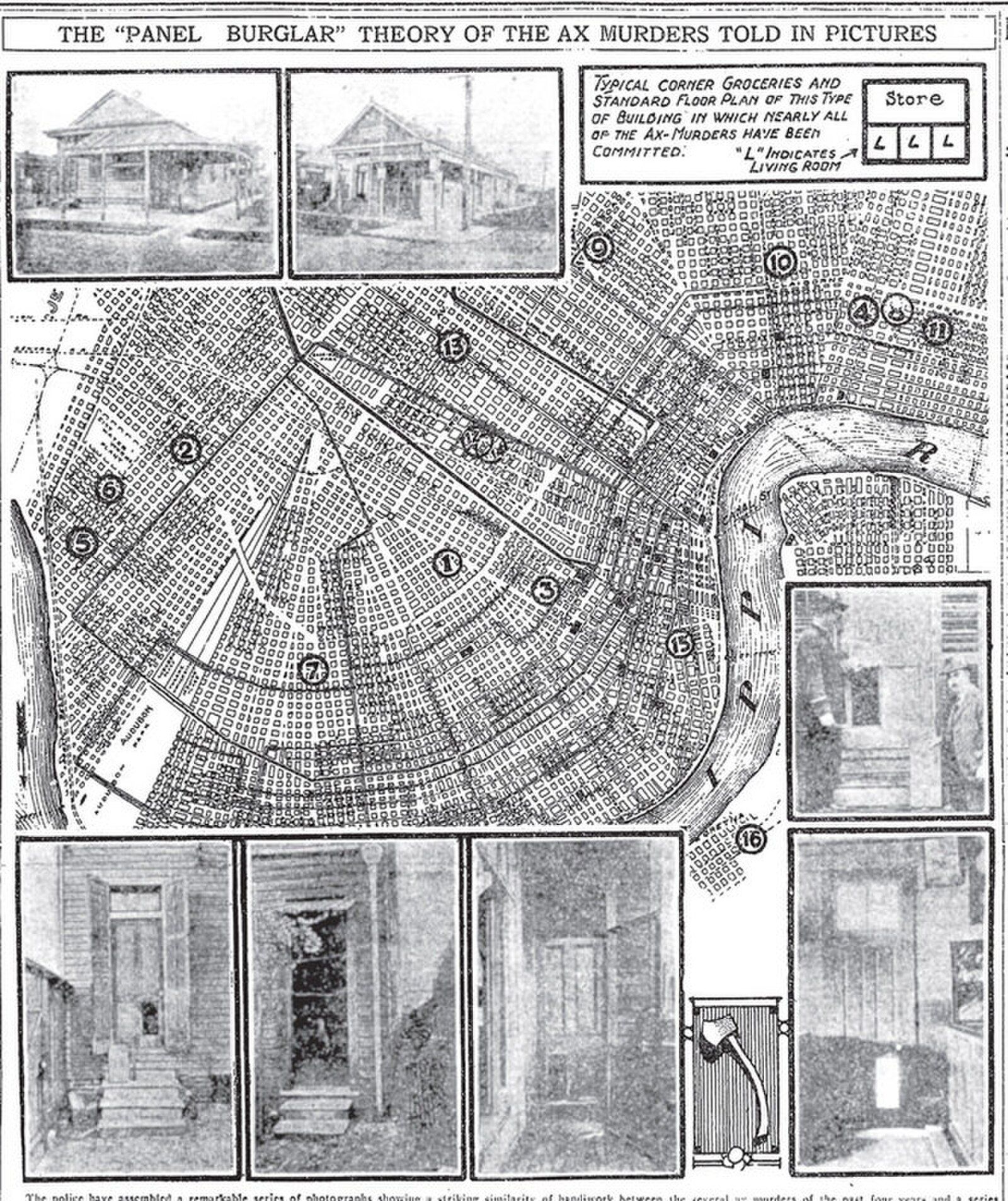
Beginning in 1918, New Orleans police investigated a sequence of attacks in which residents were struck at night inside their homes. Several victims were Italian American grocers or members of their families, although the pattern was not absolute. Entry was often made through a door panel or other opening, and an axe or hatchet found at the home was used in the assault. Some victims survived and gave accounts, while others died. The offender’s identity and whether every attributed attack had one perpetrator were never proven.
Earlier crimes complicated the pattern
Newspaper writers and later researchers linked the series to earlier attacks on Italian grocers, sometimes called the Cleaver cases. Similarities included nighttime entry and weapons taken from the household. Yet the gap in years, inconsistent details and incomplete records make it unsafe to treat every crime as the work of one person. Police questioned employees, relatives, business rivals and known offenders. Prejudice against immigrant communities influenced parts of the coverage and investigation, adding another reason to distinguish documented evidence from rumor.
A letter promises to spare rooms playing jazz
In March 1919, New Orleans newspapers printed a letter from someone claiming to be the Axeman. The writer threatened another attack but said that homes playing jazz music would be spared. Residents filled dance halls and played music through the night. No Axeman killing was reported during the threatened period. The letter made the case nationally famous, but investigators never established that its author committed any attack. It may have been genuine, a hoax, or an attempt to exploit fear already present in the city.
Survivors, suspects and unresolved contradictions
Some survivors described a male intruder, but conditions were dark and traumatic. Suspects included people connected to individual victims as well as criminals with histories of violence. One often repeated theory names Joseph Mumfre, yet the supporting story emerged long after the crimes and lacks reliable contemporary documentation. Police never found a weapon or physical trace that connected one person to the complete series. The attacks stopped after 1919 without an arrest that explained their timing or method.
Publicity created a single criminal identity
The name Axeman converted a collection of investigations into one frightening public figure. Newspapers published maps, dramatic illustrations and daily theories. That attention helped circulate warnings but also encouraged exaggeration and false linkage. The surviving record confirms a number of serious attacks and murders, not every later story attached to the label. Modern accounts differ over the victim count because they use different start dates and standards for inclusion. Responsible reporting states which events are documented rather than presenting a fixed total as uncontested.
The case beyond folklore
The Historic New Orleans Collection preserves the 1919 sheet music inspired by the case, while digitized newspapers show how fear spread through the city. The murders are now frequently packaged as supernatural folklore, but the victims were real families whose homes and businesses became crime scenes. No court determined who attacked them. The case is historically significant for the relationship between unsolved violence, immigrant stereotyping and sensational press coverage. Its mystery should not erase the uncertainty built into the evidence or the identities of those harmed.
Reader comments.
Keep it respectful and relevant to the report. No personal information, harassment or unsupported accusations. Comments are readers’ views.
Loading your sign-in status…