Bonnie and Clyde: Crime spree, manhunt and ambush
Bonnie Parker and Clyde Barrow became Depression-era outlaws during a multistate series of robberies, car thefts, kidnappings and killings that ended in a Louisiana ambush in 1934.
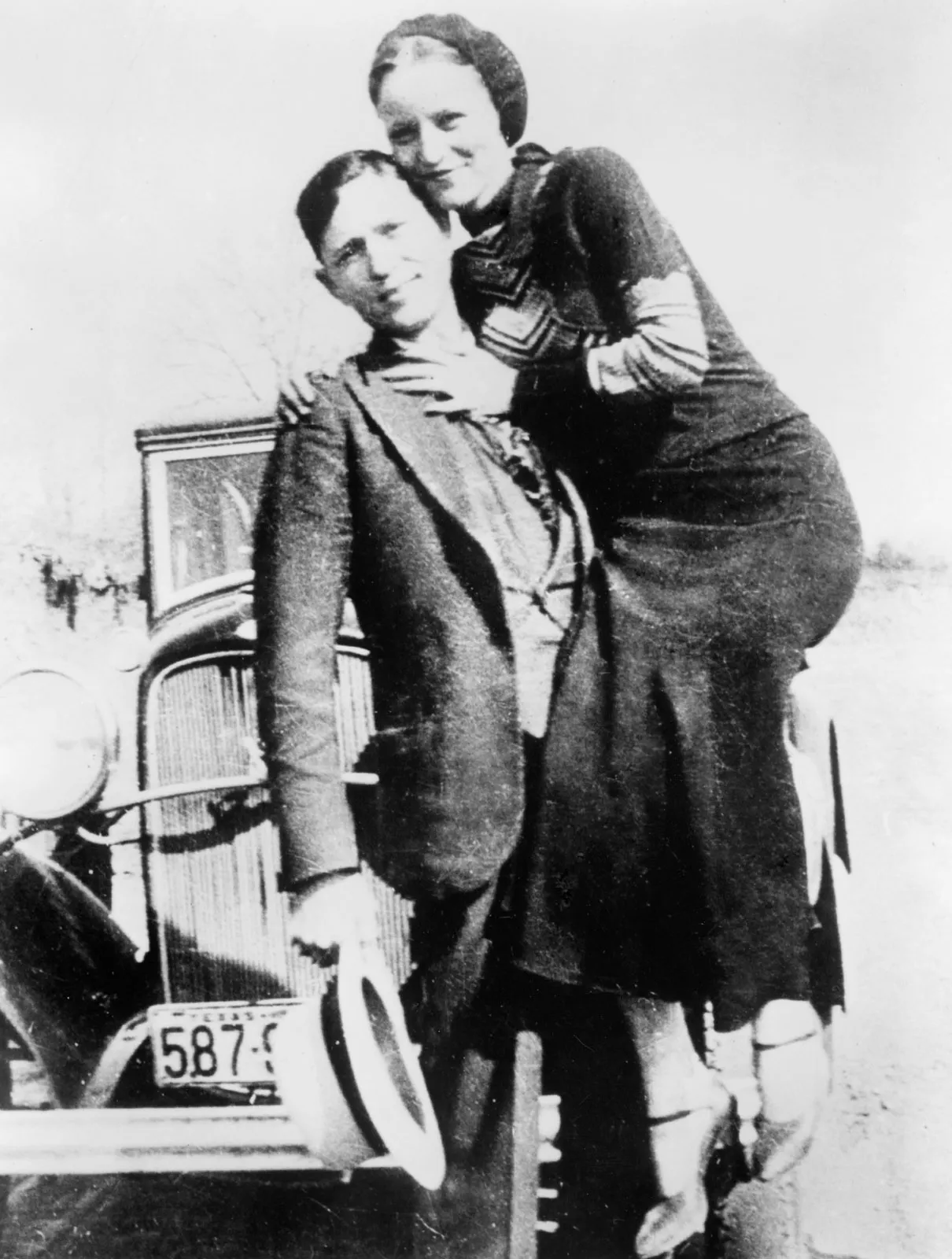
- Period
- 1932–1934
- Location
- Texas, Louisiana and the central United States
- Case status
- Bonnie Parker and Clyde Barrow killed by a law-enforcement posse
A partnership formed in Texas
Bonnie Parker and Clyde Barrow met in Texas in 1930. After Barrow’s imprisonment and parole, they became part of a changing group that robbed stores and banks, stole cars and moved across state lines. Other participants included Buck Barrow, Blanche Barrow, W.D. Jones, Raymond Hamilton and Henry Methvin at different points. The later legend of an inseparable glamorous couple obscures the gang’s unstable membership and the economic reality of many robberies, which often produced far less money than popular retellings suggest.
Violence followed the gang
The Barrow gang was linked to the deaths of law-enforcement officers and civilians, as well as abductions, jailbreaks and armed confrontations. In 1933, a shootout in Joplin, Missouri, left officers dead and yielded photographs that newspapers used to shape the couple’s public image. Buck Barrow was fatally wounded after another confrontation, and Blanche was captured. Bonnie and Clyde continued traveling, dependent on stolen vehicles, family contacts and rural hiding places while pressure from multiple jurisdictions intensified.
Why the FBI entered the pursuit
Most robberies and killings were state crimes, limiting early federal jurisdiction. The Bureau of Investigation became involved through interstate transportation of a stolen automobile. Investigators traced a prescription bottle found in an abandoned vehicle to Barrow’s family network and obtained federal warrants. The case shows how a seemingly minor physical clue could connect vehicles, relatives and movements across states. Wanted notices circulated fingerprints, photographs and descriptions to officers who otherwise lacked a unified national information system.
The final ambush
Investigators focused on the gang’s connection to Henry Methvin and his family in Louisiana. Before dawn on May 23, 1934, officers from Louisiana and Texas waited near a rural road in Bienville Parish. When Parker and Barrow approached in a stolen Ford, the posse opened fire, killing both. The volume of gunfire and the absence of an arrest attempt have remained subjects of historical debate, but the operation ended the two-year pursuit. Their bullet-damaged car and bodies became spectacles almost immediately.
Myth against the documented record
Films, songs and photographs turned Parker and Barrow into symbols of rebellion against Depression-era authority. That framing can erase victims and flatten distinctions among allegations, documented acts and later folklore. The official record supports a violent series of crimes and a determined interstate manhunt; it does not support the idea that the pair primarily robbed large banks for political reasons. Their historical significance lies partly in the contrast itself: carefully staged private photographs helped create a romantic image that survived long after the people harmed by the gang disappeared from popular memory.
Reading the historical record
The official and historical sources sometimes use different numbers when describing killings attributed to the Barrow gang because incidents involved shifting participants and unresolved allegations. This report therefore avoids assigning every death personally to Parker or Barrow without qualification. The firm record is the multistate criminal activity, federal stolen-car charge, repeated armed encounters and the 1934 ambush. Precision protects both victims and history from the simplifications that helped create the couple’s enduring outlaw mythology.
Reader comments.
Keep it respectful and relevant to the report. No personal information, harassment or unsupported accusations. Comments are readers’ views.
Loading your sign-in status…