Leopold and Loeb: The Franks murder case
Nathan Leopold and Richard Loeb kidnapped and murdered fourteen-year-old Bobby Franks in 1924, then demanded ransom in an attempt to disguise the crime. Physical evidence and their own statements exposed the plan.
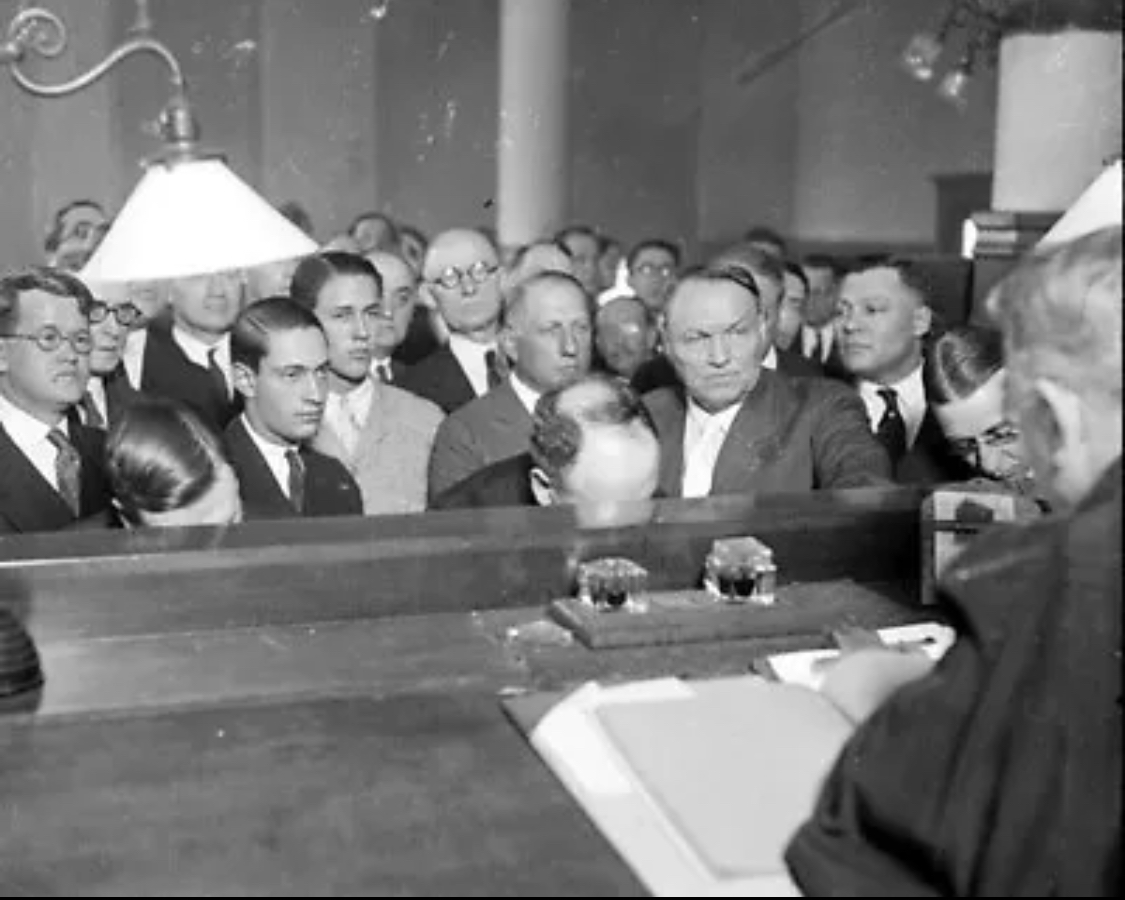
- Period
- 1924
- Location
- Chicago, Illinois
- Case status
- Nathan Leopold and Richard Loeb pleaded guilty; both received life plus ninety-nine years
A plan framed as a “perfect crime”
Nathan Leopold and Richard Loeb were wealthy Chicago students who planned a kidnapping and murder partly as an intellectual exercise in avoiding detection. On May 21, 1924, they lured fourteen-year-old Bobby Franks into a rented car, killed him and concealed his body near railroad tracks outside the city. They sent a ransom demand to his family even though the child was already dead. The body was discovered before the ransom plan could unfold as intended, forcing investigators to work from the disposal site and physical evidence.
Eyeglasses at the scene
A pair of eyeglasses found near the body carried an unusual hinge sold to a small number of customers in Chicago. The trail led to Leopold. Investigators also examined a rented automobile, handwriting, typewriting and the movements of both suspects. Leopold and Loeb initially offered an alibi involving Leopold’s car, but the family chauffeur said the vehicle had been under repair. The combination of a distinctive object and a disproved alibi broke the claim that the crime had left no trace.
Confessions and corroboration
After separate questioning, both men confessed and blamed the other for the physical act of killing Franks. The disagreement did not undermine proof that they had jointly planned and carried out the kidnapping and murder. Investigators recovered or confirmed details involving the rented car, ransom note, disposal route and personal property. The case illustrates why confession evidence is strongest when matched against facts independently established rather than accepted as a complete narrative on its own.
A guilty plea shifts the courtroom question
Defense attorney Clarence Darrow entered guilty pleas, eliminating a jury trial over guilt and placing sentencing before Judge John Caverly. The prosecution sought death. Darrow delivered a lengthy argument emphasizing the defendants’ youth, psychological development and the danger of answering violence with state execution. Experts presented competing views of mental abnormality and responsibility. The hearing was not a finding that the defendants lacked criminal responsibility; the guilty pleas admitted the offenses, and the dispute concerned punishment.
Life sentences and different endings
Judge Caverly imposed life imprisonment for murder plus ninety-nine years for kidnapping, citing the defendants’ youth in declining death sentences. Loeb was killed by another prisoner in 1936. Leopold later contributed to education and medical research in prison, received parole in 1958 and lived in Puerto Rico until his death in 1971. The case’s enduring importance lies in the sentencing debate: overwhelming evidence resolved guilt, while the court confronted whether even an infamous, calculated crime committed by young defendants required execution.
Reading the historical record
Unlike many famous historical cases, the central question here is not identity. The guilty pleas, confessions and corroborating evidence established joint responsibility for the kidnapping and murder. The continuing debate concerns punishment, legal strategy and how later culture interpreted the defendants’ claims of intellectual superiority. Bobby Franks should remain central to the account: he was a child selected as part of a plan, not merely the device that launched a celebrated courtroom performance by lawyers and experts.
Reader comments.
Keep it respectful and relevant to the report. No personal information, harassment or unsupported accusations. Comments are readers’ views.
Loading your sign-in status…