The Rosenberg espionage trial
Julius and Ethel Rosenberg were convicted of conspiring to pass U.S. atomic and military information to the Soviet Union. Their 1953 executions remain among the most contested outcomes of the Cold War.
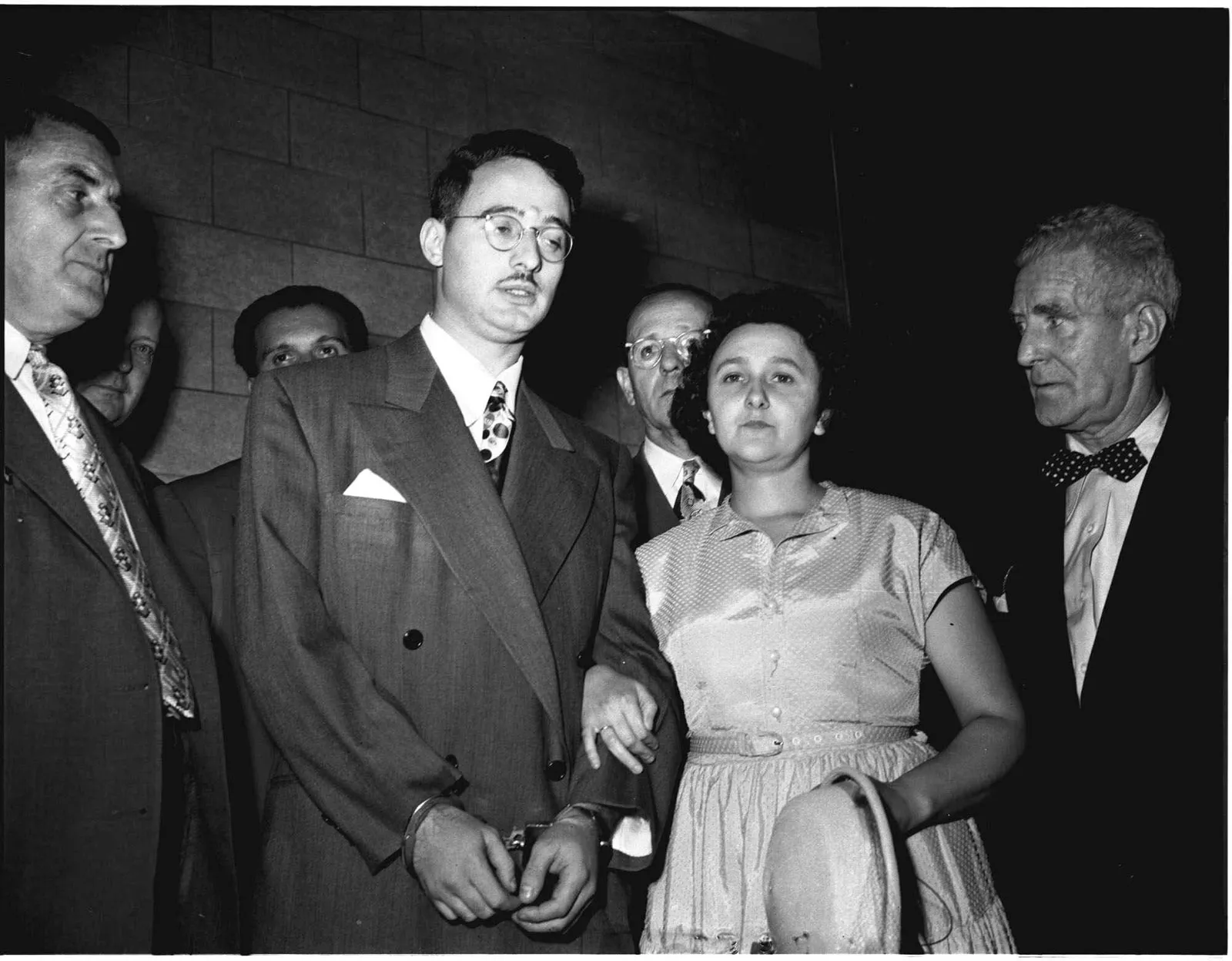
- Period
- 1950–1953
- Location
- New York, New York
- Case status
- Julius and Ethel Rosenberg convicted of conspiracy to commit espionage and executed
An investigation emerging from Soviet atomic espionage
The case developed from the federal investigation of Soviet efforts to obtain American military and atomic information during and after World War II. British physicist Klaus Fuchs confessed to passing secrets, and that inquiry led through courier Harry Gold to David Greenglass, a machinist who had worked at Los Alamos. Greenglass identified his brother-in-law Julius Rosenberg as part of a recruitment and information network. Julius was arrested in July 1950; Ethel, Greenglass’s sister, was arrested weeks later after testifying before a grand jury.
The conspiracy charge
The Rosenbergs were not tried for treason, which carries distinct constitutional requirements. Prosecutors charged conspiracy to commit espionage under federal law. At the 1951 trial, Greenglass testified that he provided sketches and information about the atomic project and said Ethel typed notes. His wife Ruth also testified. The government argued that Julius organized a network serving the Soviet Union and that Ethel knowingly assisted. The defense attacked the cooperating witnesses’ credibility and suggested they shifted blame to protect themselves.
Verdict and death sentences
A jury convicted Julius and Ethel Rosenberg and co-defendant Morton Sobell. Judge Irving Kaufman sentenced both Rosenbergs to death, linking the espionage to broader Cold War dangers. Appeals and worldwide clemency campaigns challenged the evidence, fairness and punishment. Presidents Truman and Eisenhower declined to stop the executions. Julius and Ethel were executed at Sing Sing prison on June 19, 1953, leaving two young sons. Sobell received a prison sentence, and Greenglass received fifteen years after cooperating.
What later records changed
Declassified Venona decrypts and post-Soviet evidence supported the conclusion that Julius Rosenberg was involved in Soviet espionage and recruited others. The record concerning Ethel is more limited and complicated. David Greenglass later acknowledged that his trial testimony about Ethel typing notes may have been false and said he had sought to protect his wife. Those later disclosures do not undo the jury verdict, but they matter when assessing the relative conduct of the two defendants and the reliability of testimony used to obtain death sentences.
A case requiring precise distinctions
The historical debate often collapses into the question of whether the Rosenbergs were “guilty” or “framed.” The surviving record demands narrower conclusions. Julius’s espionage role is strongly corroborated by later evidence. Ethel knew of aspects of his activity, but the proof that she performed the specific acts emphasized at trial is contested, and a principal witness recanted a crucial detail. The case therefore remains significant not because no espionage occurred, but because evidence, prosecutorial leverage and punishment were distributed unevenly in a period of extraordinary national fear.
Reading the historical record
The FBI narrative records the investigation and prosecution, the National Archives preserves the broader Cold War record, and later disclosures allow historians to test trial claims against evidence unavailable to the jury. Together they support differentiated conclusions about Julius and Ethel rather than a single verdict about the couple. That distinction matters because conspiracy law allowed shared criminal liability, while the death sentences required the court to judge two individual defendants whose documented participation was not identical.
Reader comments.
Keep it respectful and relevant to the report. No personal information, harassment or unsupported accusations. Comments are readers’ views.
Loading your sign-in status…