The Double Indemnity Murder: Ruth Snyder, Judd Gray and a Staged Burglary
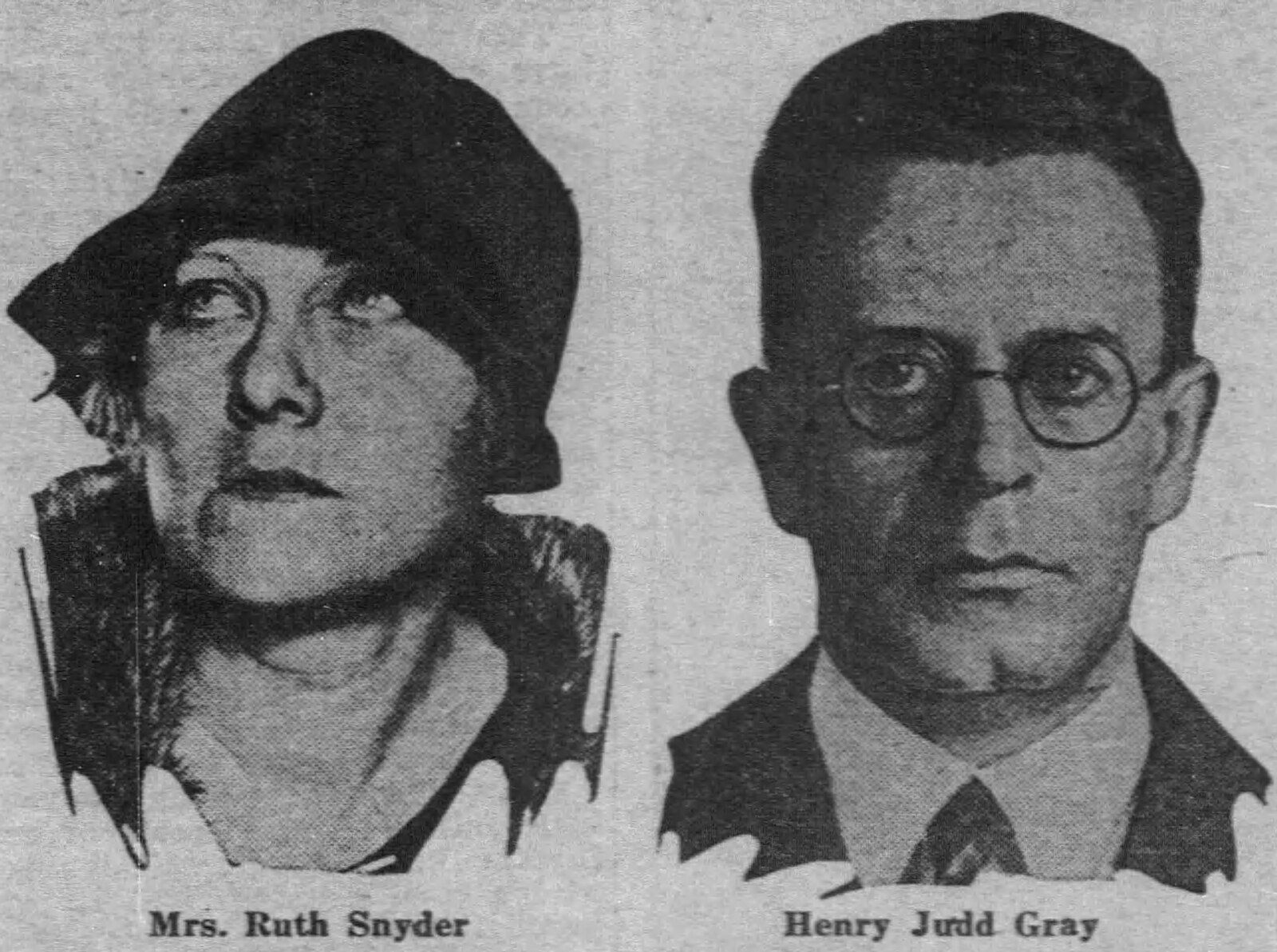
Ruth Snyder and Judd Gray were convicted of murdering Snyder’s husband Albert in 1927 and attempting to make the death resemble a burglary.
- Period
- 1927–1928
- Location
- Queens, New York
- Case status
- Ruth Snyder and Judd Gray convicted and executed
A death presented as a burglary
On March 20, 1927, Albert Snyder was found dead in the Queens home he shared with his wife Ruth and their daughter. Ruth Snyder told police that an intruder had attacked her, killed her husband and ransacked the house. Investigators quickly questioned details of the scene. Items appeared arranged rather than taken, and the account did not fit the physical evidence. Detectives learned that Snyder had been having an affair with corset salesman Henry Judd Gray, shifting the inquiry from an unknown burglar to a planned domestic killing.
Insurance and earlier attempts
Prosecutors alleged that Snyder had obtained a life-insurance policy on her husband containing a double-indemnity provision for accidental death. Evidence at trial also described earlier unsuccessful attempts to kill him. According to the state, Snyder and Gray planned the murder together, used a window sash weight and other means to attack Albert, then staged the rooms. The defense positions diverged as each accused the other of taking the leading role. Their conflicting statements supplied investigators with detail but also created questions about individual conduct.
A joint trial under extraordinary attention
Snyder and Gray were tried together in Long Island City. The proceeding attracted intense newspaper coverage, with Ruth Snyder subjected to openly gendered descriptions and moral judgments. Prosecutors presented confessions, physical evidence and the insurance motive. Each defense tried to reduce its client’s responsibility by emphasizing the influence of the other. The jury convicted both defendants of first-degree murder in May 1927. They were sentenced to death at Sing Sing prison.
The electric-chair photograph
Ruth Snyder and Judd Gray were executed on January 12, 1928. A Daily News photographer concealed a small camera on his ankle and captured an image of Snyder in the electric chair at the moment the current was applied. The photograph was published across the newspaper’s front page. It became one of the most notorious examples of tabloid journalism and raised lasting ethical questions about photographing death, prison security and the treatment of a woman’s execution as spectacle.
From court record to popular fiction
The case influenced novels and films, most famously works built around a spouse, lover and insurance policy. Fiction simplified and rearranged facts, while the real proceeding involved a daughter who lost both parents and a victim often reduced to a plot device. The phrase double indemnity became attached to the crime because of the policy, but insurance was only one part of the state’s case. Confessions, the staged scene and evidence of planning supported the convictions.
What the case reveals about the press
The Snyder-Gray case demonstrates how a criminal trial can be remembered through one image and a sensational label. The convictions are not historically uncertain, but the press presentation shaped which defendant became the public symbol of the murder. Coverage often treated Ruth Snyder more harshly than Gray and focused on sexuality, appearance and motherhood. Reading the case carefully requires separating the evidence used at trial from the tabloid language that surrounded it, and restoring Albert Snyder and the couple’s child to the historical account.
Reader comments.
Keep it respectful and relevant to the report. No personal information, harassment or unsupported accusations. Comments are readers’ views.
Loading your sign-in status…