Seventy-Seven Minutes in San Ysidro: The 1984 McDonald’s Massacre
A gunman killed 21 people and wounded 19 at a McDonald’s in San Ysidro on July 18, 1984, before a police sniper ended the attack.
- Period
- 1984
- Location
- San Ysidro, San Diego, California
- Case status
- Gunman killed by a police sniper; 21 victims died
A crowded restaurant near the border
On the afternoon of July 18, 1984, families, employees and travelers were inside a McDonald’s on West San Ysidro Boulevard, close to the United States–Mexico border. A heavily armed man entered shortly before 4 p.m. and began firing without selecting victims by any discernible personal connection. Customers and workers tried to hide beneath counters and tables or escape through doors and windows. Calls reached police within minutes, but officers arriving outside faced a building with large windows, uncertain sight lines and continuing gunfire.
Twenty-one people were killed
The attacker killed 21 people and wounded 19. The victims included children, parents, restaurant workers and people who happened to be passing through the car park. Many members of the predominantly Mexican American community knew one another or were connected through schools and extended families. Emergency crews could not safely enter while shots continued. Survivors waited among the dead and injured until the threat ended. Accounts of the massacre are sometimes centered on the gunman; the lasting public record is the scale of loss carried by San Ysidro families.
Police built a perimeter and sought a clear shot
San Diego police surrounded the restaurant and deployed tactical officers. The gunman moved between windows, fired toward police and people outside, and remained difficult to see clearly from protected positions. About 77 minutes after the attack began, a police sniper positioned on a nearby post-office roof obtained a view and shot him. Officers then entered, searched the building and began the work of removing survivors. The response later became the subject of formal review, including questions about communications, command and the extreme risks of an assault into an occupied building.
The investigation reconstructed the gunman’s preparations
Investigators identified the attacker as San Ysidro resident James Huberty. They traced the firearms, ammunition and statements he made before leaving home. Police concluded that he acted alone and died at the scene, so there was no criminal trial in which evidence could be tested before a jury. Later civil claims advanced theories about responsibility and the restaurant’s security, but courts did not convert those claims into a finding that another person had caused the massacre. Responsible history separates documented preparation from speculative explanations of motive.
First responders carried injuries beyond the scene
The event affected survivors, victims’ relatives, witnesses, dispatchers, officers and medical teams. A later study commissioned through the National Institute of Mental Health examined post-traumatic stress among responding police officers, helping expand recognition that mass-casualty scenes can cause long-term psychological injury. Departments around the country studied the San Diego response as they reconsidered tactical equipment, incident command and support after extraordinary violence. Those lessons developed further after later attacks, but San Ysidro was an early and painful reference point.
A school and memorial replaced the restaurant
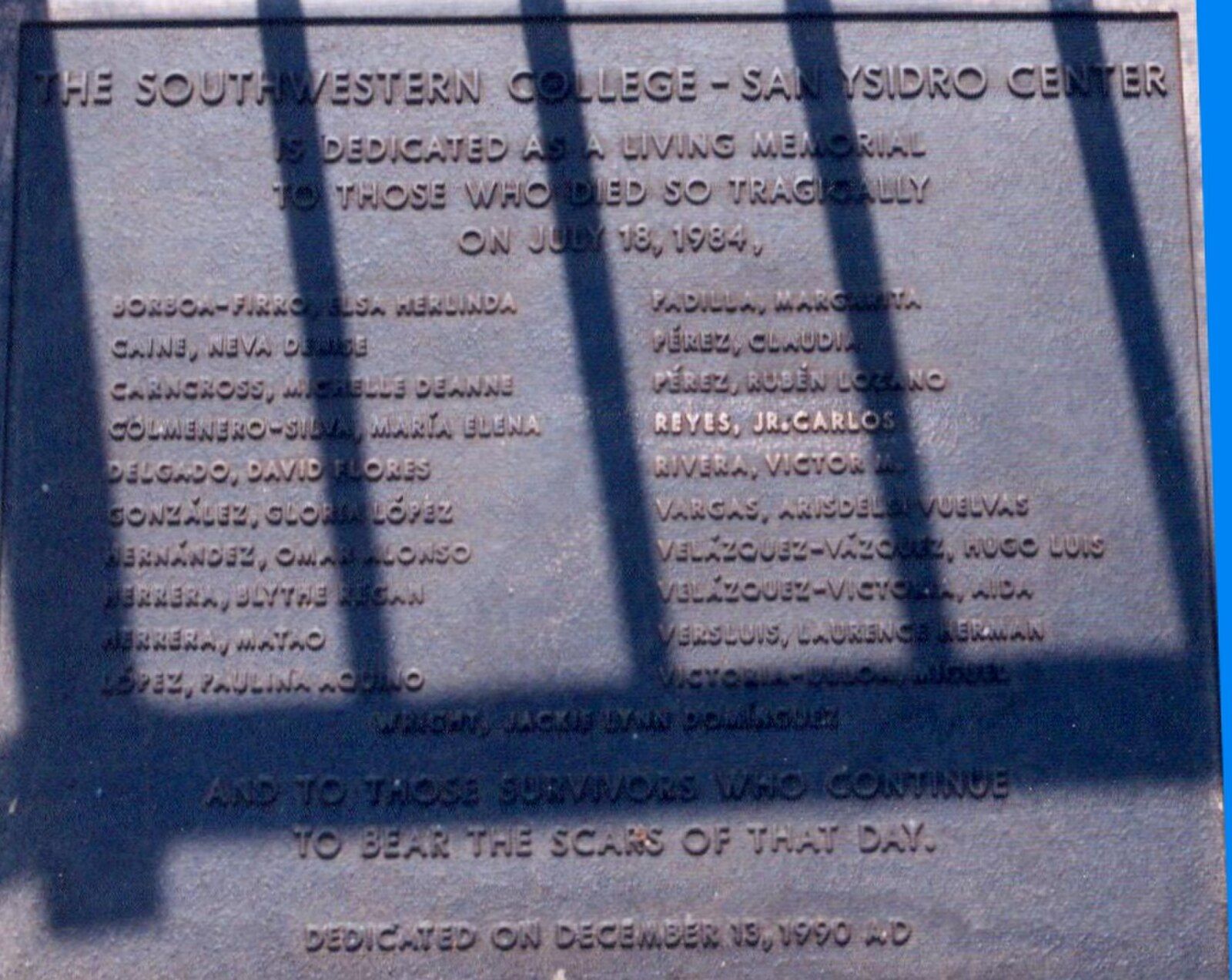
The restaurant was demolished and the land was eventually used for Southwestern College’s Higher Education Center at San Ysidro. A memorial with 21 elements honors the people killed. The decision placed education and community use where the attack occurred, while preserving a site for remembrance. Anniversary gatherings continue to bring survivors and relatives together. The memorial resists reducing the event to a record or a gunman’s name: it locates the history in the people who were lost and in a border community that rebuilt around them.
Reader comments.
Keep it respectful and relevant to the report. No personal information, harassment or unsupported accusations. Comments are readers’ views.
Loading your sign-in status…