The Unabomber investigation
A seventeen-year campaign of mailed and planted bombs killed three people and injured twenty-three before Theodore Kaczynski’s writings led his family to recognize him and contact authorities.
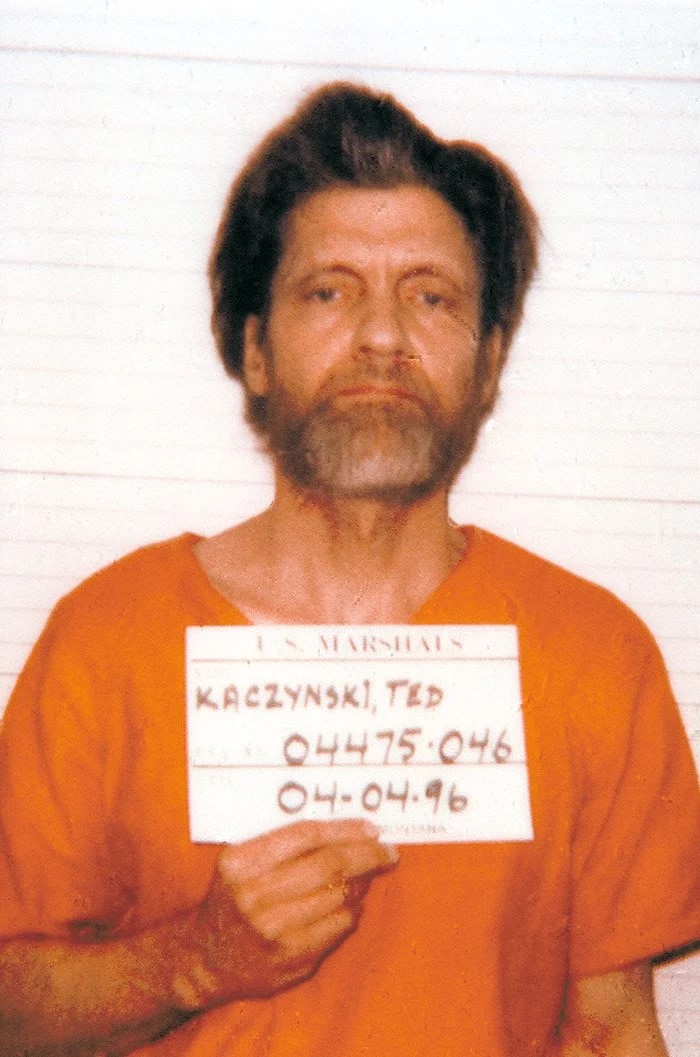
- Period
- 1978–1996
- Location
- United States
- Case status
- Theodore Kaczynski pleaded guilty and received life imprisonment without parole
A campaign hidden inside ordinary packages
The first device attributed to the offender was found at the University of Illinois Chicago in 1978 and injured a police officer when opened. Later bombs targeted university personnel, airline-related victims and people connected to technology and business. The devices evolved in construction and were often made from carefully selected or handmade components that limited traceable commercial links. Investigators used the name UNABOM from the early university-and-airline focus; newspapers later turned that case label into “Unabomber.”
Deaths and an expanding federal investigation
The attacks continued intermittently across the United States. Computer-store owner Hugh Scrutton was killed in 1985, advertising executive Thomas Mosser in 1994 and timber-industry official Gilbert Murray in 1995. Twenty-three other people were injured over the campaign. FBI agents, postal inspectors and explosives experts compared fragments, delivery methods, wording and target patterns. Long gaps between attacks and the absence of a conventional relationship between offender and victims made suspect development unusually difficult.
The demand to publish a manifesto
In 1995 the bomber offered to stop killing if major newspapers published a lengthy essay attacking industrial society and technological development. After consultation with law enforcement, The Washington Post and The New York Times printed the text. The decision was controversial because publication rewarded coercion, but it also placed the offender’s distinctive language before millions of readers. David Kaczynski and his wife Linda recognized ideas and expressions resembling those of David’s brother Theodore and approached authorities through a lawyer.
The Montana cabin search
Investigators compared the manifesto with letters written by Theodore Kaczynski and developed an affidavit for a search warrant. In April 1996 agents arrested him at a small cabin near Lincoln, Montana. Inside, authorities found bomb components, extensive writings and a completed device. The physical evidence connected the isolated cabin to a nationwide series that had appeared anonymous for years. The search also demonstrated why family information alone was not treated as proof; investigators corroborated the linguistic lead with records and evidence suitable for court.
Plea, sentence and the evidentiary legacy
Kaczynski’s lawyers prepared a mental-health defense, while he resisted being portrayed as mentally ill. In 1998 he pleaded guilty to federal charges in an agreement that avoided a capital trial and received life imprisonment without parole. He died in federal custody in 2023. The case remains important for the disciplined separation of investigative tools: linguistic similarities generated direction, but recovered components, writings and a completed bomb provided physical corroboration. Publication did not solve the case by itself; it allowed a family to recognize a voice that investigators could then test against evidence.
Reading the historical record
The public record includes crime-scene evidence, the manifesto, family correspondence, the Montana search and the guilty plea. Those materials support the attribution without requiring speculation about every motive. Kaczynski’s political writing explains how he described his campaign, but it does not excuse attacks on people who had no opportunity to answer his arguments. The legal outcome rests on his plea to federal offenses and the recovered evidence, not on a retrospective psychological label or a romantic image of isolation.
Reader comments.
Keep it respectful and relevant to the report. No personal information, harassment or unsupported accusations. Comments are readers’ views.
Loading your sign-in status…