A Wagon Exploded at Noon: The Unsolved 1920 Wall Street Bombing
A horse-drawn wagon carrying explosives detonated outside J.P. Morgan & Co. on September 16, 1920, killing 38 people and injuring hundreds.
- Period
- 1920
- Location
- New York City
- Case status
- Unsolved; no individual was charged
A wagon stops beside the financial district
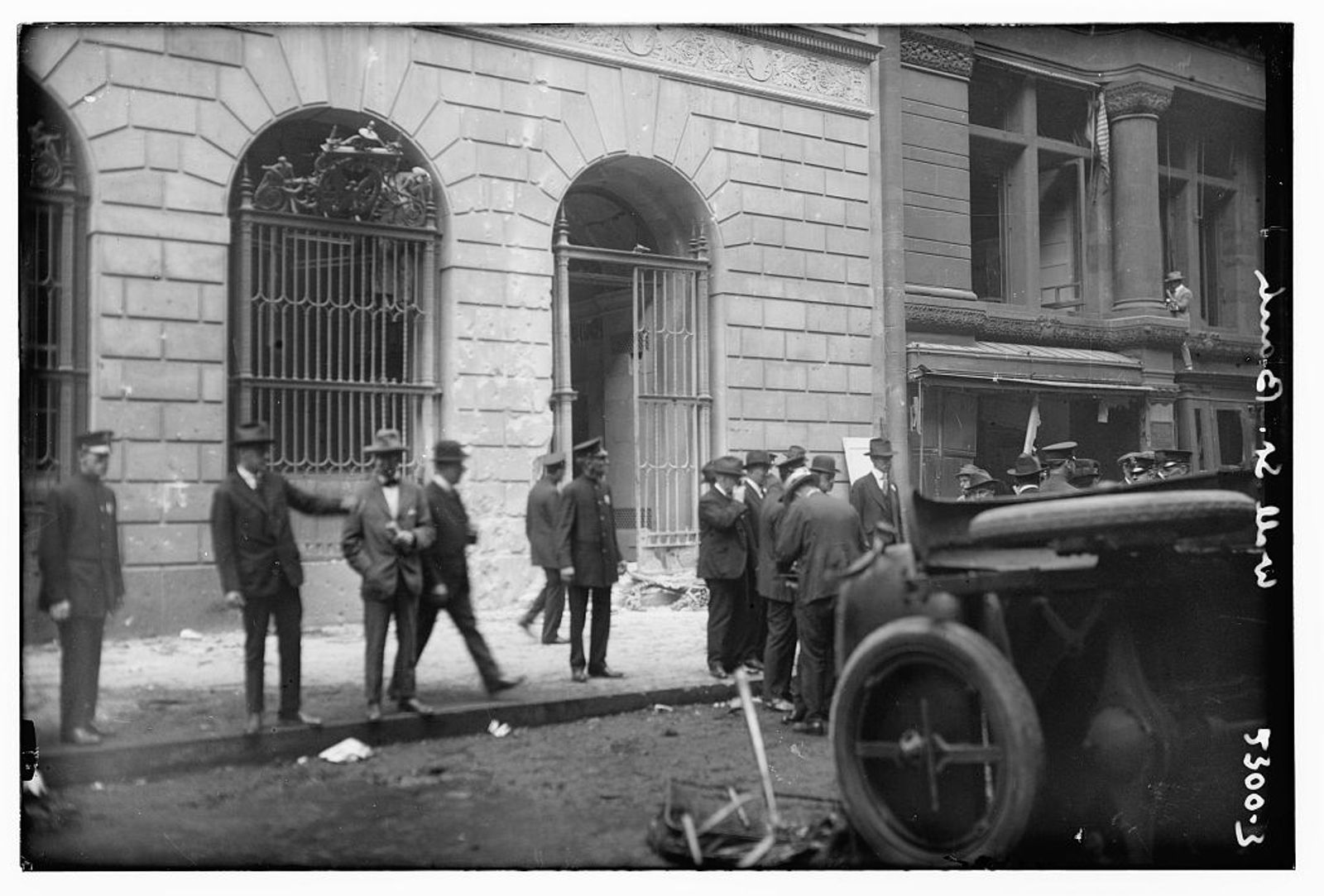
Shortly before noon on September 16, 1920, a horse-drawn wagon stopped near the corner of Wall and Broad streets, opposite the offices of J.P. Morgan & Co. The financial district was crowded as workers left for lunch. At 12:01 p.m., explosives hidden in the wagon detonated. Iron sash weights packed around the bomb became shrapnel. The blast shattered windows, damaged buildings and struck people across the street. Thirty-eight people ultimately died and hundreds were injured, many of them clerks, messengers and tradespeople.
The scene was cleared before it was understood
Police, firefighters and medical workers responded immediately, but the need to reopen the district competed with evidence preservation. Streets were washed and debris was moved while investigators were still trying to determine how the bomb had been constructed. The wagon and horse were destroyed, leaving fragments rather than an intact delivery vehicle. The New York Police Department reconstructed elements of the device and examined the metal weights, fuse and explosive material. None carried a unique identifier that led directly to a builder.
A warning appears in a nearby mailbox
A postal worker found leaflets attributed to the American Anarchist Fighters in a mailbox near the scene. They demanded freedom for political prisoners and warned that the group would not tolerate continued detention. Investigators considered whether the attack was connected to the postwar Red Scare, labor conflict and the prosecution of Italian anarchists. The timing and wording supported a political motive, but the leaflet did not identify a bomber. Officials also examined whether J.P. Morgan or another financial institution had been the intended target.
The Bureau follows anarchist networks
The Bureau of Investigation, predecessor of the FBI, worked with New York police and federal agencies. Agents investigated Galleanists, followers of anarchist Luigi Galleani who had been linked to earlier bombings. They scrutinized people associated with printed propaganda and explosive attacks, including Mario Buda. Some investigators later believed Buda may have built the Wall Street bomb, but he had left the United States and no prosecution tested that theory. Other suspects and explanations were considered without producing evidence sufficient for charges.
No confession or forensic match closed the case
Investigators collected witness descriptions, fragments and intelligence from radical groups, yet the available forensic science could not connect the bomb to an individual. The horse and wagon offered no dependable ownership trail. Witnesses had seen ordinary street activity before the explosion and could not provide a consistent identification of whoever left the vehicle. The case remained open for years, but no one was indicted. Later historical assessments describe likely anarchist responsibility as a conclusion based on patterns and context, not a judicial finding.
The physical scars and public meaning
Damage from the explosion can still be seen on the former J.P. Morgan building. The bombing changed security awareness in the financial district and contributed to broader federal attention to domestic political violence. It also occurred during a period when immigrants and political dissidents were subjected to mass suspicion, making careful attribution essential. The established record is that a deliberately constructed wagon bomb killed 38 people. The identity and exact organization of those responsible remain unresolved despite more than a century of investigation and historical analysis.
Reader comments.
Keep it respectful and relevant to the report. No personal information, harassment or unsupported accusations. Comments are readers’ views.
Loading your sign-in status…