The Zodiac Killer
Five people were killed in attacks attributed by law enforcement to the self-proclaimed Zodiac in 1968 and 1969. Letters and ciphers sent to newspapers intensified public fear. The FBI assisted local agencies with handwriting, fingerprint and cryptographic analysis, but the murders were not under federal jurisdiction and the writer’s identity remains unproven.
- Period
- 1968–1969
- Location
- Northern California
- Case status
- Unsolved
Four attacks in Northern California
The series commonly treated as the canonical Zodiac crimes began on December 20, 1968, when teenagers David Faraday and Betty Lou Jensen were shot near Lake Herman Road in Benicia. On July 4, 1969, Darlene Ferrin was killed and Michael Mageau survived an attack at Blue Rock Springs Park in Vallejo.
In September, Cecelia Shepard and Bryan Hartnell were stabbed at Lake Berryessa; Shepard died and Hartnell survived. San Francisco taxi driver Paul Stine was shot and killed on October 11. Police jurisdictions investigated their own crime scenes while trying to determine which acts had a common perpetrator.
Letters turn a killer into a public figure
In July 1969, three newspapers received letters claiming responsibility for the earlier attacks. Each included part of a 408-symbol cipher and demanded publication. A Vallejo couple, Donald and Bettye Harden, solved the message. It contained violent boasts but did not reveal the writer’s identity.
Further communications adopted the name “Zodiac” and a crosshair-like symbol. Some letters included information that appeared to show knowledge of the crimes, and a piece of Stine’s shirt accompanied later correspondence. Other letters may have been imitations, creating a continuing authentication problem.
What the FBI actually did
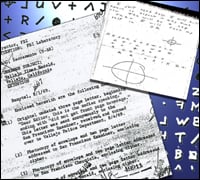
The murders were state and local crimes, so the FBI did not lead the investigation. Local agencies requested laboratory assistance. FBI examiners compared handwriting, looked for latent fingerprints and analysed the ciphers and the physical correspondence.
Those records are now public through the FBI Vault. They show a supporting role rather than a secret federal solution. The fragmented jurisdiction and the writer’s shifting claims made it difficult to establish which crimes and letters belonged to the same person.
Ciphers solved, identity unresolved
The 408 cipher was solved soon after publication. A different 340-character cipher resisted solution for fifty-one years before a private team announced a solution in 2020. The decoded text again failed to provide a verifiable name. Other short ciphers remain disputed.
Solving a message is not the same as identifying its author. Over the decades, investigators, writers and private researchers have proposed many suspects. None has been proved in court or accepted by all responsible agencies as the killer.
Why the case still generates false certainty
The Zodiac created material designed to keep the public engaged: symbols, puzzles, threats and claims that could be tested only partly. That structure rewards pattern-finding and allows a theory to appear persuasive even when it depends on selective evidence.
The sound historical position is narrower. Five deaths are commonly attributed to the canonical attacks, two victims survived, local agencies remain responsible for their cases, and the author of the authenticated correspondence has not been conclusively identified.
Reader comments.
Keep it respectful and relevant to the report. No personal information, harassment or unsupported accusations. Comments are readers’ views.
Loading your sign-in status…